country
EN
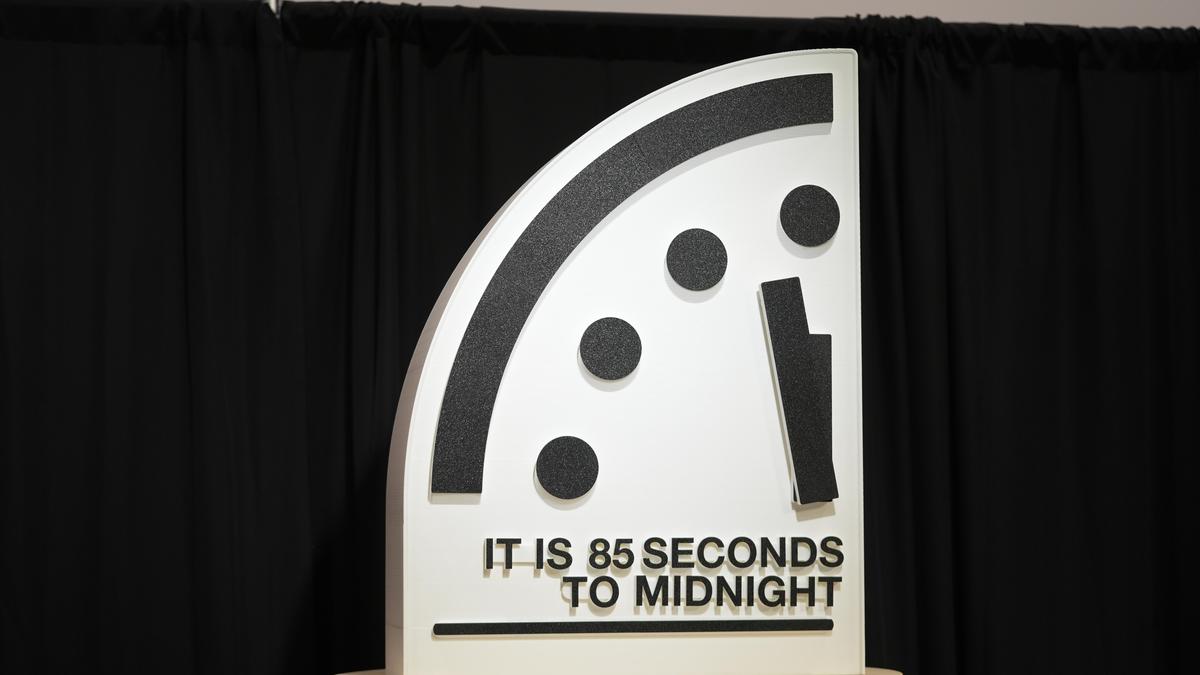
The Doomsday Clock shows the danger but not the way out
['Authors']
The Hindu - Home
The Doomsday Clock is historically significant because it transformed the abstract, technical threat of nuclear war into a universally understood symbol of urgency.
And in the last eight decades it has become a cornerstone of the cultural framework that treats nuclear weapons and climate change as existential, rather than just political, problems.
Before the clock, nuclear strategy was a secret language spoken only by generals and physicists.
To be sure, this decision was scientifically sound — climate change is indeed an existential threat — but it also muddled the message.
Whenever the clock moved before, everyone knew it was about nuclear bombs.