None
EN
The Engineer’s Guide to Blockchain Finality
['Benjamin Samuels']
The Trail of Bits Blog
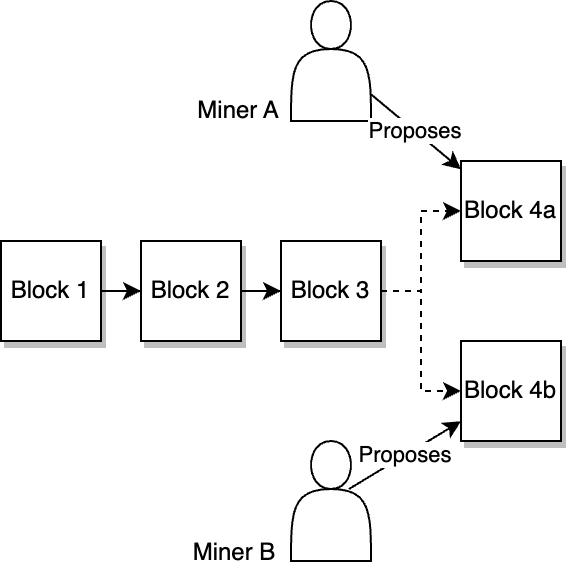
Chains using probabilistic finality are unique in that their blocks are never actually finalized—instead, they become probabilistically final, or more “final” as time goes on. Once they have received credit for the deposit transaction and their private fork has more blocks than the canonical chain, the attacker instructs their network to publish the private chain’s blocks to the honest nodes following the canonical chain. Since probabilistically final chains don’t define finality conditions, finality must be measured probabilistically based on the number of blocks that have elapsed since the target transaction/ancestor block.