None
DE
SSH Remoting is Here!
[]
Zed Industries - Blog
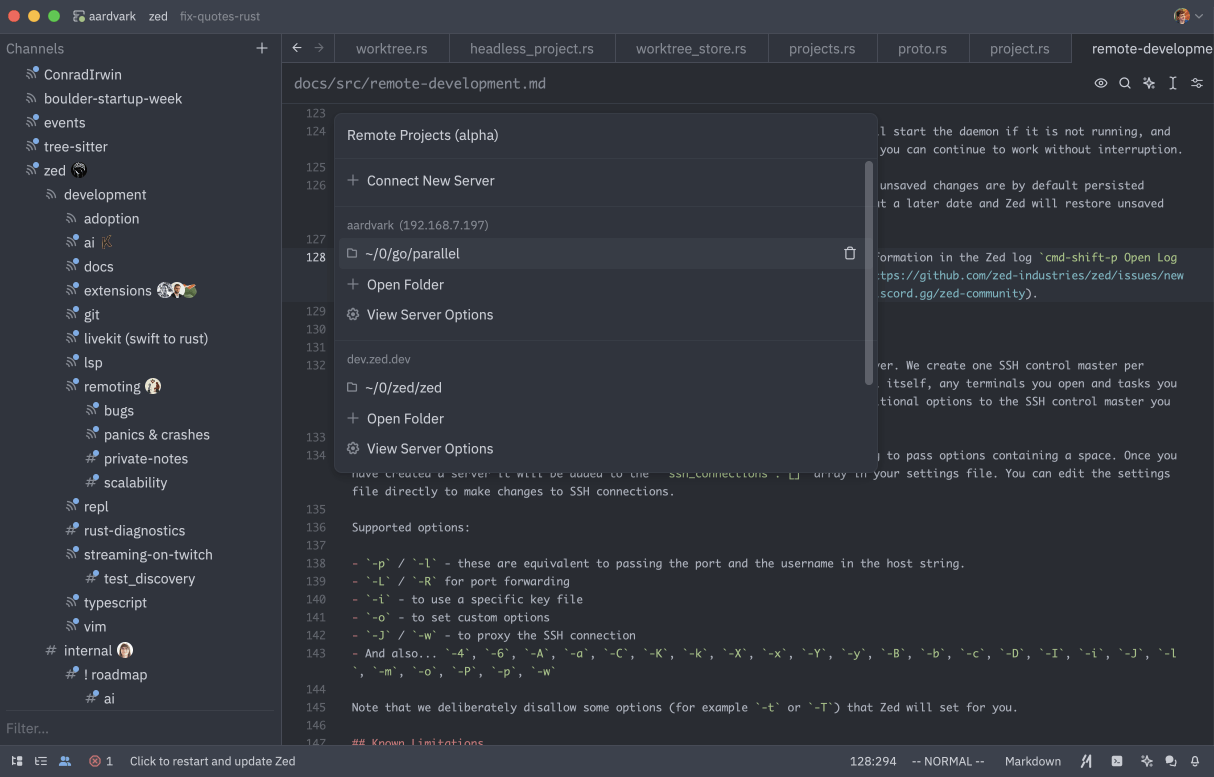
The UI runs fully locally to give you 120 frames per second of perfectly configured graphics, but with all the gubbins: language servers, tasks, and terminals run on the remote server where they can take advantage of cloud hardware. While Zed is built for remote code editing, changing the infrastructure to support SSH required solving a whole bunch of sub-problems, from SSH connection maintenance, to how we build the remote server, to integrating the feature into everything else we have in Zed. Once we've established the connection and installed the remote server, we initialize it as a daemon, so that when connections do drop the remote server continues running and on reconnect your language servers are still fully initialized.