None
EN
David Himmelstein on Medicare Dis-Advantage, Tauhid Chappell on Cannabis Equity
['.Wp-Block-Co-Authors-Plus-Coauthors.Is-Layout-Flow', 'Class', 'Wp-Block-Co-Authors-Plus', 'Display Inline', '.Wp-Block-Co-Authors-Plus-Avatar', 'Where Img', 'Height Auto Max-Width', 'Vertical-Align Bottom .Wp-Block-Co-Authors-Plus-Coauthors.Is-Layout-Flow .Wp-Block-Co-Authors-Plus-Avatar', 'Vertical-Align Middle .Wp-Block-Co-Authors-Plus-Avatar Is .Alignleft .Alignright', 'Display Table .Wp-Block-Co-Authors-Plus-Avatar.Aligncenter Display Table Margin-Inline Auto']
CounterSpin
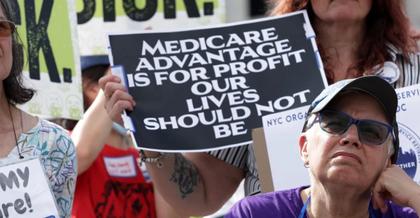
This week on CounterSpin: Headlined “The Cash Monster Was Insatiable,” a 2022 New York Times piece reported insurance companies gaming Medicare Advantage, presented as a “low-cost” alternative to traditional Medicare.
Some companies cherry-picked healthier seniors for enrollment with cynical tricks like locating their offices up flights of stairs.
Such maneuvers don’t lead to good health outcomes, but they serve the real goal: netting private insurers more money.
We hear from David Himmelstein, co-founder of Physicians for a National Health Program and co-author of this new analysis of Medicare Advantage.
Tauhid Chappell has tracked the issue for years now; he teaches the country’s first graduate-level course on equity movements in the cannabis industry, at Thomas Jefferson University.
['look'
'cannabis'
'win'
'weeks'
'tauhid'
'chappell'
'health'
'disadvantage'
'equity'
'advantage'
'week'
'himmelstein'
'companies'
'marijuana'
'york'
'medicare'
'david']