None
EN
Liberal Institutionalism—Its Threatened Past, Its Threatened Future
['David Obura', 'Patricia Pinho', 'Thiago Jesus', 'Hilppa Gregow', 'Sari Laine', 'Jacob Taylor', 'Kershlin Krishna', 'Massimiliano Santini', 'Homi Kharas', 'Sebastian Strauss']
News RSS Feed
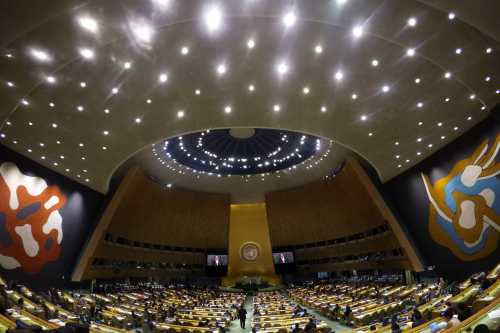
“Liberal institutionalism,” the line of thinking that inspired how our world has been ordered since at least the 1940s, assumes that domestic and international institutions facilitate cooperation and peace among countries. Approximated in a host of post-World War II institutions—the United Nations (U.N.), the World Bank, the North Atlantic Treaty Organization (NATO), the General Agreement on Tariffs and Trade (GATT), and others—these values and institutions are the foundation of today’s “liberal world order.” The stark truth is that many of today’s domestic governance standards and international institutions reflect the experiences and expectations of the former Western bloc: a handful of North American and Western European countries that were among the first liberal democracies.