None
EN
Years after high water crisis, lax policies leave Michigan coast vulnerable
['Great Lakes Echo', '.Wp-Block-Co-Authors-Plus-Coauthors.Is-Layout-Flow', 'Class', 'Wp-Block-Co-Authors-Plus', 'Display Inline', '.Wp-Block-Co-Authors-Plus-Avatar', 'Where Img', 'Height Auto Max-Width', 'Vertical-Align Bottom .Wp-Block-Co-Authors-Plus-Coauthors.Is-Layout-Flow .Wp-Block-Co-Authors-Plus-Avatar', 'Vertical-Align Middle .Wp-Block-Co-Authors-Plus-Avatar Is .Alignleft .Alignright']
Great Lakes Echo
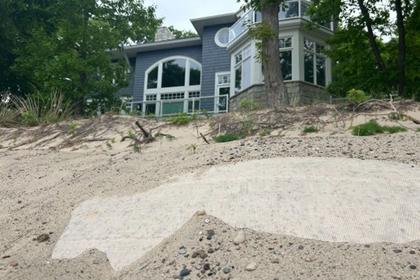
The receding water levels on the Great Lakes have allowed some sand to return ashore where it helps bury sandbags placed during high water levels.
The end result is that many communities that faced crisis during the last high water event will be no better protected when the waters inevitably rise again.
The high water crisis forced local leaders to rethink those lax policies, said Herasanna Richards, a legislative associate at the Michigan Municipal League.
EGLE officials called for removal in 2023, sparking outcry from landowners who argue the erosion crisis isn’t over.
For now, EGLE is allowing their sand tubes to remain on the beach as long as they’re covered by sand.
['michigan'
'property'
'policies'
'shoreline'
'vulnerable'
'tubes'
'leave'
'crisis'
'erosion'
'high'
'lax'
'coast'
'sand'
'state'
'water']