None
EN
“It Is Still a Surprise”: Cosmic Winds are Defying Expectations in Neutron Star and Supermassive Black Hole Observations
['Ryan Whalen']
The Debrief
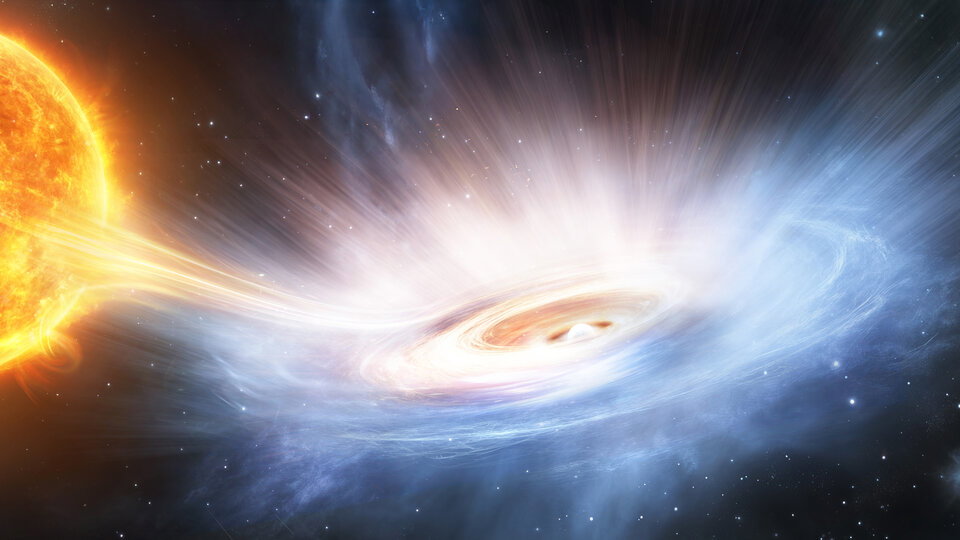
Wind originating in the disk surrounding the neutron star GX13+1 was significantly denser than that generated from material around a supermassive black hole.
Like their multiplicity of effects, cosmic winds are also generated from more than one source, including supermassive black holes.
GX13+1 made a perfect study subject as it was much closer than any supermassive black hole, allowing for a clearer view.
This made the wind’s speed far slower than the more than 200 million kilometers per hour that cosmic winds from supermassive black holes near the Eddington limit can travel.
As a result, supermassive black hole disks typically project weaker ultraviolet light, rather than more powerful X-rays.
['hole'
'defying'
'star'
'expectations'
'xrism'
'winds'
'observations'
'matter'
'xray'
'supermassive'
'surprise'
'neutron'
'black'
'cosmic'
'wind']