None
EN
NMR Uncovers Hidden Electrolyte States, Pointing Toward Better Batteries
[]
Blog – Science
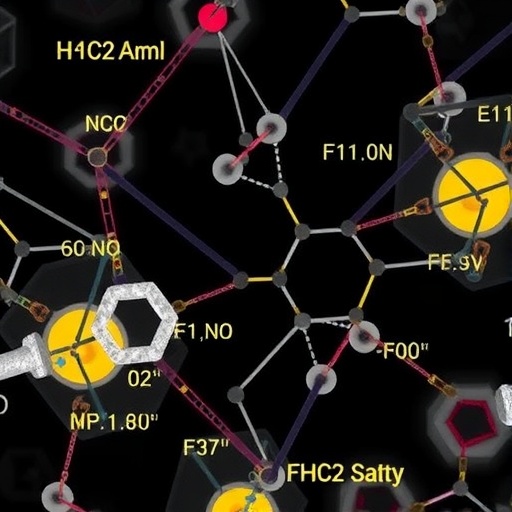
Liquid battery electrolytes have long been described as if they were simple recipes: a salt dissolved in a solvent, perhaps combined with an additive and adjusted to a specific concentration.
Diffusion describes how particles move over relatively longer distances, but battery electrolytes also undergo local exchange, molecular rotation, ion hopping, and short-range rearrangement.
Combining these measurements with molecular simulations and artificial-intelligence-based analysis could reveal connections between local liquid structure and measurable battery outcomes.
Subject of Research: Liquid battery electrolytes, their microscopic structure, motion, and dynamic heterogeneity, studied using nuclear magnetic resonance (NMR).
Article Title: “NMR for liquid battery electrolytes: Structure, motion, and heterogeneity”News Publication Date: May 26, 2026Web References: eScience Energy: https://www.sciencedirect.com/journal/escience-energy; Article: https://www.sciencedirect.com/science/article/pii/S3050995526000528?via%3DihubReferences: DOI: 10.1016/j.esen.2026.100077Image Credits: Yunpei Zhu and Husam N. AlshareefKeywordsBattery electrolytes, nuclear magnetic resonance, NMR, electrolyte heterogeneity, ion transport, solvation structure, battery interfaces, SEI, CEI, lithium batteries, sodium batteries, energy storage, electrochemistry