None
EN
Astronomers Found a White Dwarf Half Earth’s Size Packing 1.226 Times the Mass of the Sun
['Sarah Jones']
The Daily Galaxy –Great Discoveries Channel
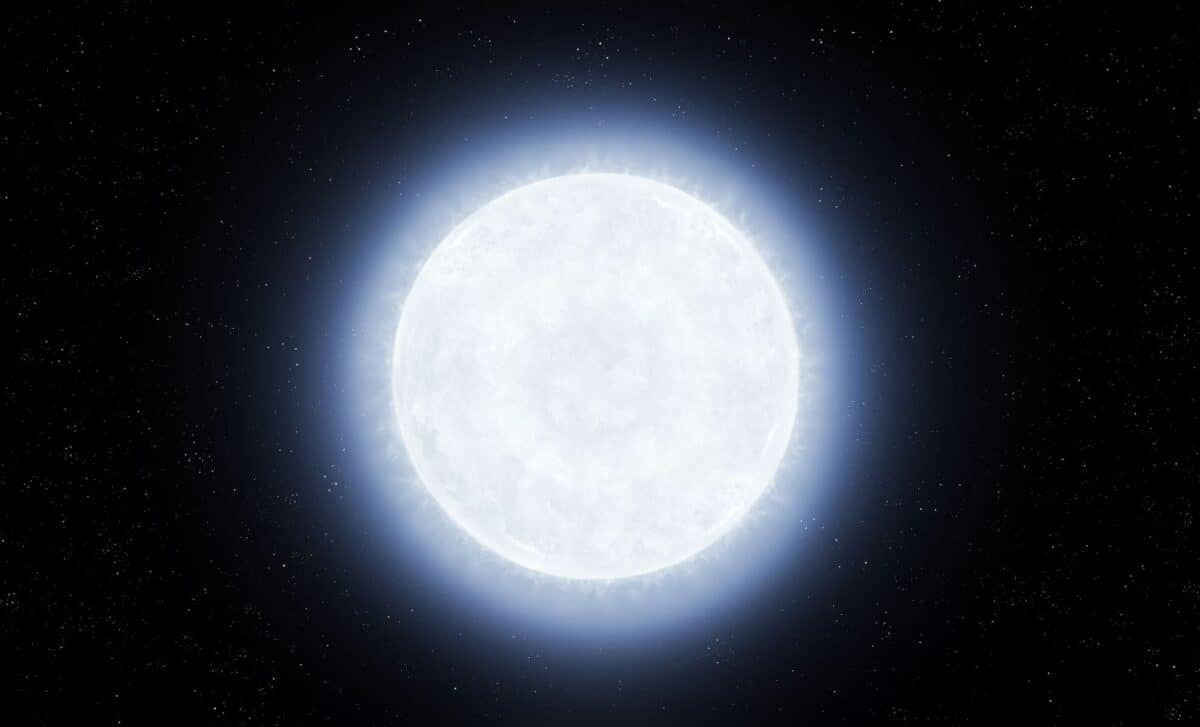
A white dwarf only about half the size of Earth is packing roughly 1.226 times the mass of the Sun.
That difference matters because oxygen-neon white dwarfs are thought to end their lives differently from typical carbon-oxygen white dwarfs, which can produce Type Ia supernovae when they have stellar companions and accumulate matter.
A Distant Companion Gave Astronomers a Useful ClueThere is no easy way to look inside a white dwarf.
Astronomers observe its photosphere, the thin visible surface layer, while more than 99% of the star’s mass lies deeper inside.
The white dwarf has a mass of around 1.226 solar masses, packed into a radius roughly half that of Earth.