None
EN
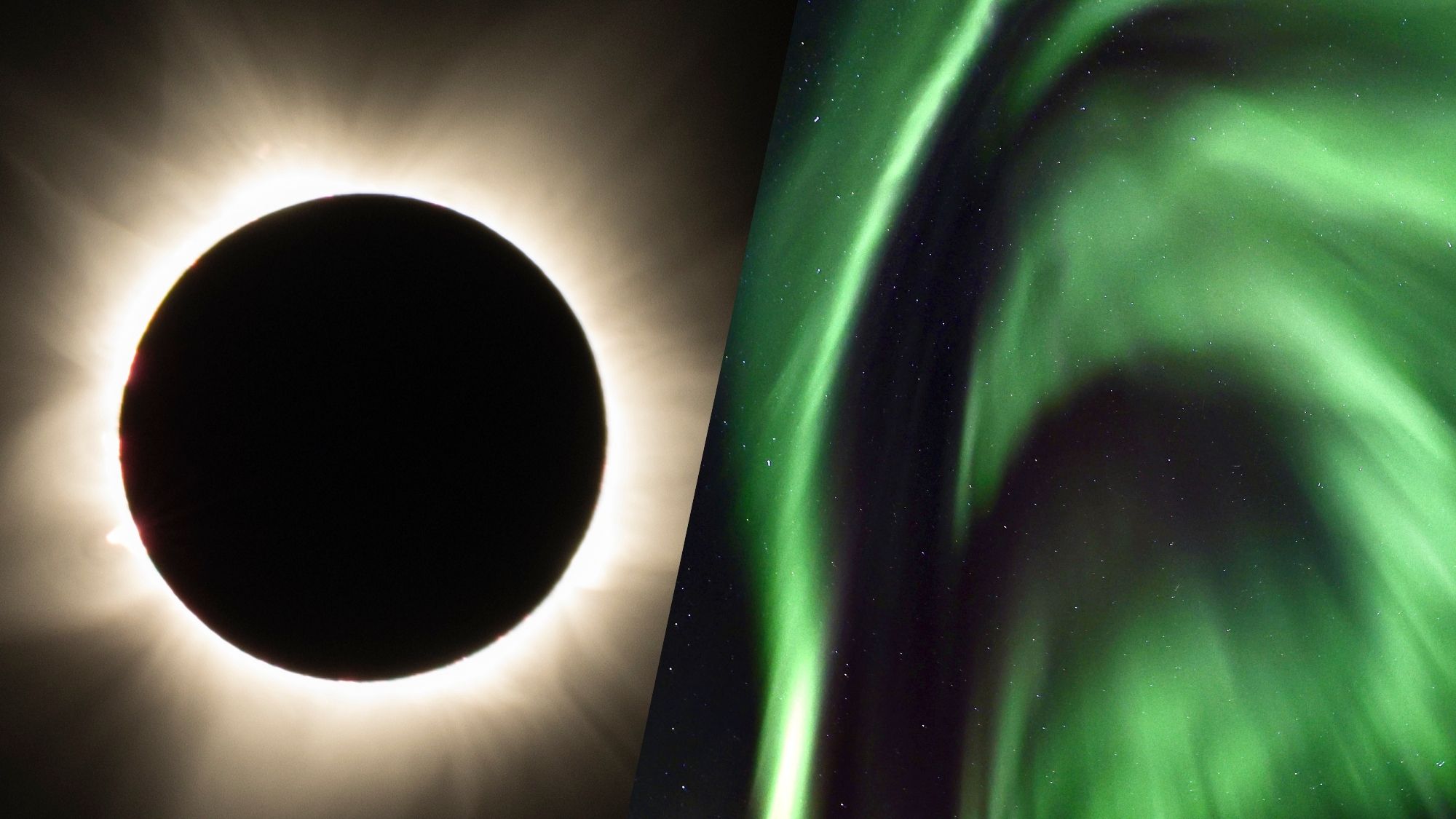
Could the northern lights be visible during the total solar eclipse on Aug.12? Maybe.
['Daisy Dobrijevic', 'Skywatching Editor', 'Layer Van-Ds .Vds-Author Font-Size Var --Text-Base', 'Font-Size Var --Vds-Author-Font-Size', 'Var --Text-Base', 'Line-Height Var --Text-Base--Line-Height', 'Line-Height Var --Vds-Author-Line-Height', 'Var --Text-Base--Line-Height', 'Letter-Spacing Var --Tracking-Normal', 'Letter-Spacing Var --Vds-Author-Letter-Spacing']
Latest from Space.com
Click for next articleOn Aug. 12, 2026, a total solar eclipse will sweep across Earth, giving skywatchers across Greenland, Iceland and northern Spain an incredible view of totality.
He attempted to spot auroras during the 2015 total solar eclipse over Svalbard but found the sky never got dark enough.
Totality occurs in the afternoon over Greenland and Iceland, meaning observers will be beneath the daytime portion of the auroral oval.
Unlike the nighttime aurora oval, which expands dramatically during geomagnetic storms, the dayside auroral oval changes much less, making displays harder to see even during active space weather.
If the sun happens to unleash a powerful geomagnetic storm in the days leading up to Aug. 12, eclipse chasers in Greenland or Iceland could witness something truly remarkable.