None
EN
The sun is covered in tiny whirlpools we’ve never seen before
[]
Latest Science News -- ScienceDaily
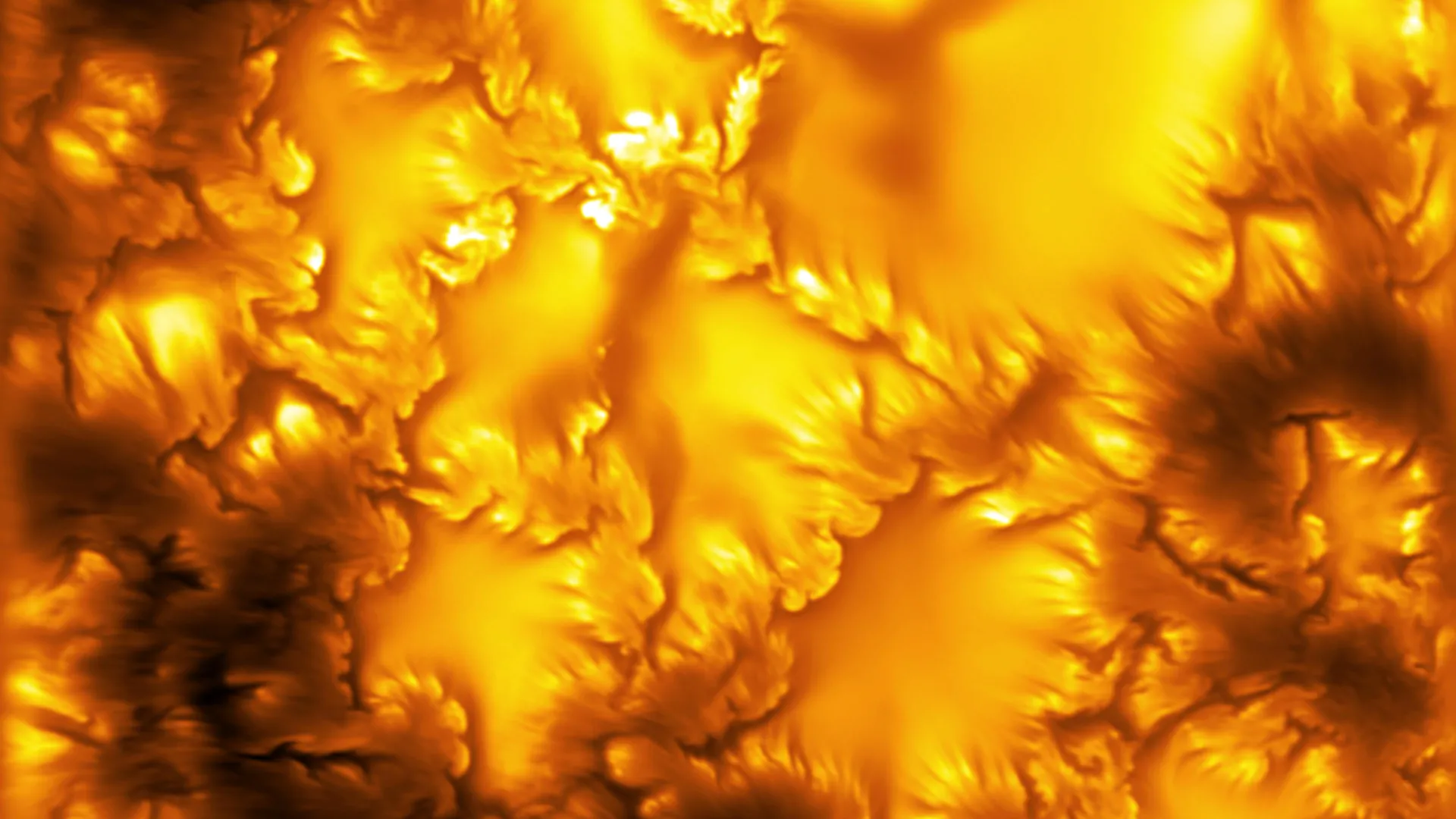
The team combined observations from the NSF Daniel K. Inouye Solar Telescope, the world's largest solar telescope, with advanced computer simulations.
Tiny Whirlpools Along Solar GranulesThe newly detected vortices appear along the boundaries of structures known as granules, which densely cover the Sun's visible surface.
One major unanswered question has been what causes those magnetic field lines to become twisted in the first place.
Because the researchers find that these small whirlpools appear continuously wherever the magnetic field is sufficiently strong, the vortices could provide a persistent mechanism for twisting the Sun's magnetic field lines.
Changes in the Sun's magnetic field drive its roughly eleven-year activity cycle -- which is exceptionally rapid on a cosmic scale.