None
EN
Don’t barre the F chord. Try embellishing it instead
['Jimmy Brown', 'Senior Music Editor', 'Layer Van-Ds .Vds-Author Font-Size Var --Text-Base', 'Font-Size Var --Vds-Author-Font-Size', 'Var --Text-Base', 'Line-Height Var --Text-Base--Line-Height', 'Line-Height Var --Vds-Author-Line-Height', 'Var --Text-Base--Line-Height', 'Letter-Spacing Var --Tracking-Normal', 'Letter-Spacing Var --Vds-Author-Letter-Spacing']
Latest from Guitar World
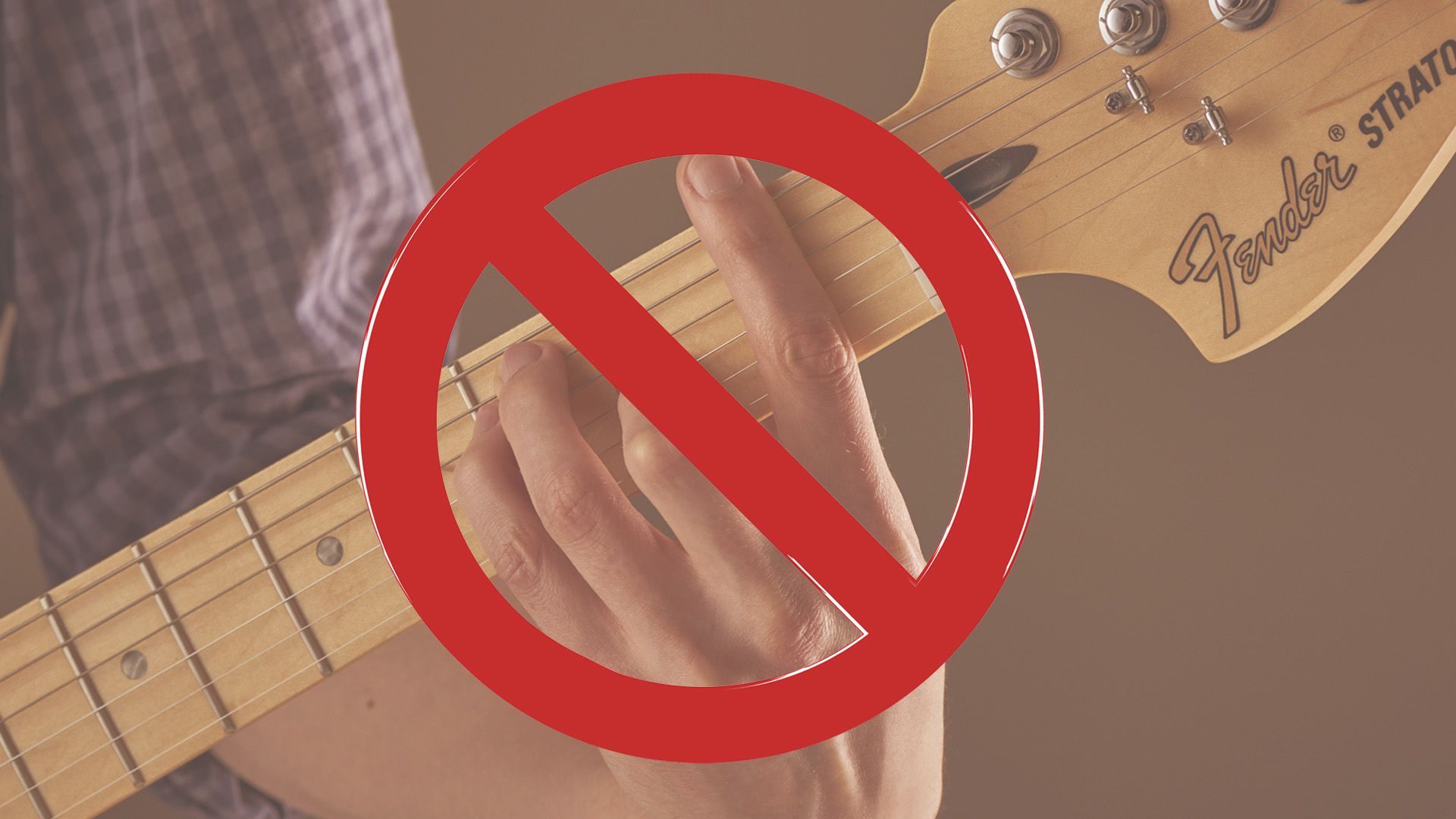
Instead of always playing a low F chord as a standard 1st-position barre chord across all six strings, consider not barring it and instead using the 6th-string thumb fretting technique to form the shape illustrated in FIGURE 1.
(Image credit: Future)Doing this offers you two benefits:1) It’s often more convenient and comfortable to not have to rotate your wrist to form the full F barre chord shape when playing a progression of mostly open chords.
(Image credit: Future)Countless guitarists have used this technique and the F-Fsus2 embellishment to decorate and add melodic interest to their chord playing.
Or you could barre only the B and high E strings with your index finger to get a full F chord, with the same six notes as the conventional barre chord.
Keep in mind that sometimes the chord you are to play in a given song is simply F and not Fmaj7.