None
EN
NASA's MAVEN Illuminates New Understanding of Auroras at Mars
['Most Read Matthew Williams', 'Last Days']
Universe Today
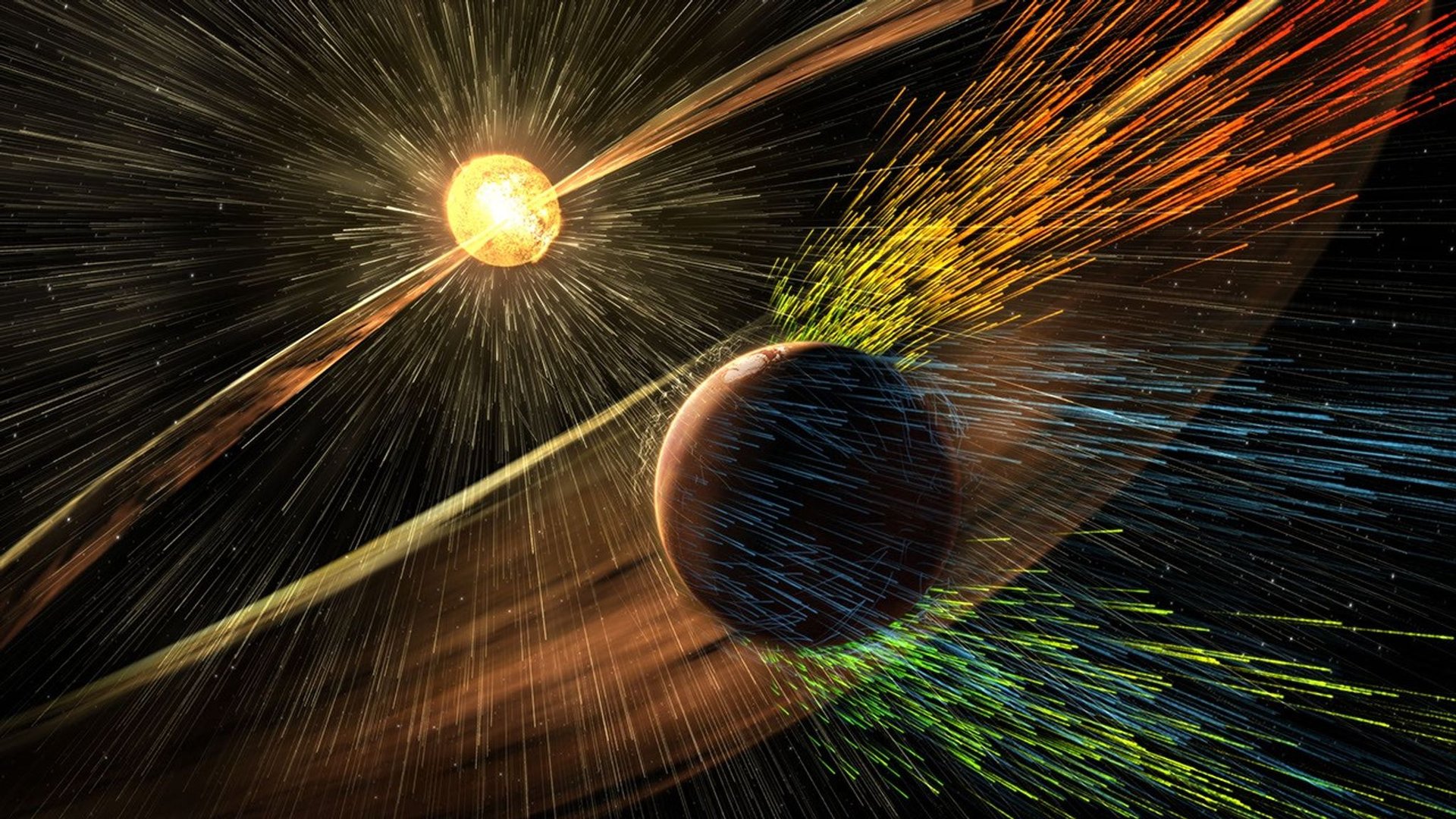
NASA's Mars Atmosphere and Volatile Evolution (MAVEN) mission studied the Red Planet's atmosphere for more than a decade.
Owing to the differences in our two planets' magnetic fields, Martian aurorae occur on much smaller scales.
This leads to the firing of electrons back into Earth's atmosphere, which are channeled towards the poles to generate aurorae.
Unlike Earth, Mars has no planet-wide magnetic field, only miniature magnetospheres that arise from intensely magnetized sections of crust scattered across the surface.
These instruments were used to determine the configuration of Mars' magnetic fields, derive electrical currents, and measure plasma flows in the ionosphere, respectively.