None
EN
20 Years of Watching a Blazar Reveals Something Stranger Than Expected
[]
Knowridge Science Report
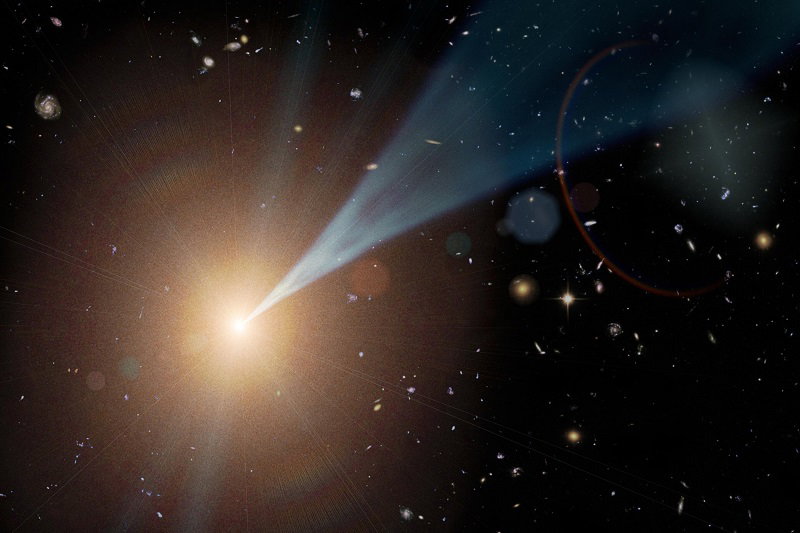
Researchers from the Institute of Nuclear Physics of the Polish Academy of Sciences and Heidelberg University studied one particular blazar, PKS 2155-304, located about 1.5 billion light-years away.
Most blazar studies are based on observations lasting only days or weeks, sometimes separated by months or years.
PKS 2155-304 sometimes showed this pattern during short periods, but it disappeared when scientists examined the full two decades of observations.
In two observations from 2012, PKS 2155-304 showed an additional unexpected dip in its spectrum, even though the blazar was not experiencing a major flare.
The new study does not prove that PKS 2155-304 produces neutrinos.