None
EN
A Tibetan cooperative keeps a centuries-old weaving tradition alive
['Ap News']
myMotherLode.com
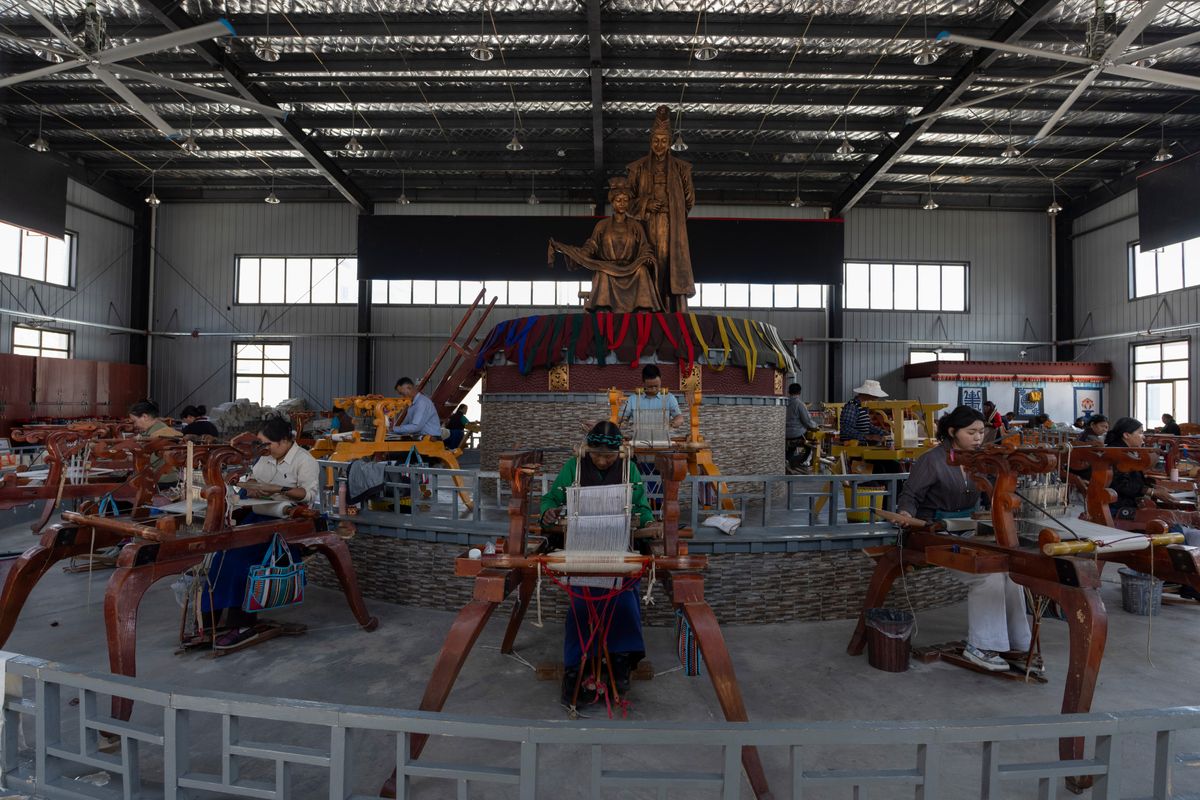
SHANNAN, Tibet (AP) — More than a dozen men and women sit at wooden looms, sliding shuttles through rows of wool yarn before pulling each thread tight.
They work at the Ethnic Huaji Handwoven Cooperative in Shannan, where artisans are trying to preserve one of Tibet’s oldest weaving traditions while creating jobs for local residents.
The cooperative specializes in Zeter, a finer variety of Pulu made from especially soft wool from the necks and backs of sheep.
According to local tradition, the weaving craft dates to when Princess Wencheng introduced weaving techniques to Tibet after marrying the king.
Next to the workshop, a small showroom displays scarves, shawls, jackets, bags and other products made from Pulu and Zeter.