None
EN
First photos of SpaceX lunar rocket crash show blackened hole torn into the moon's surface
['Brandon Specktor', 'Harry Baker', 'Pandora Dewan', 'James Price', 'With Contributions From', 'Layer Van-Ds .Vds-Author Font-Size Var --Text-Base', 'Font-Size Var --Vds-Author-Font-Size', 'Var --Text-Base', 'Line-Height Var --Text-Base--Line-Height', 'Line-Height Var --Vds-Author-Line-Height']
Latest from Live Science
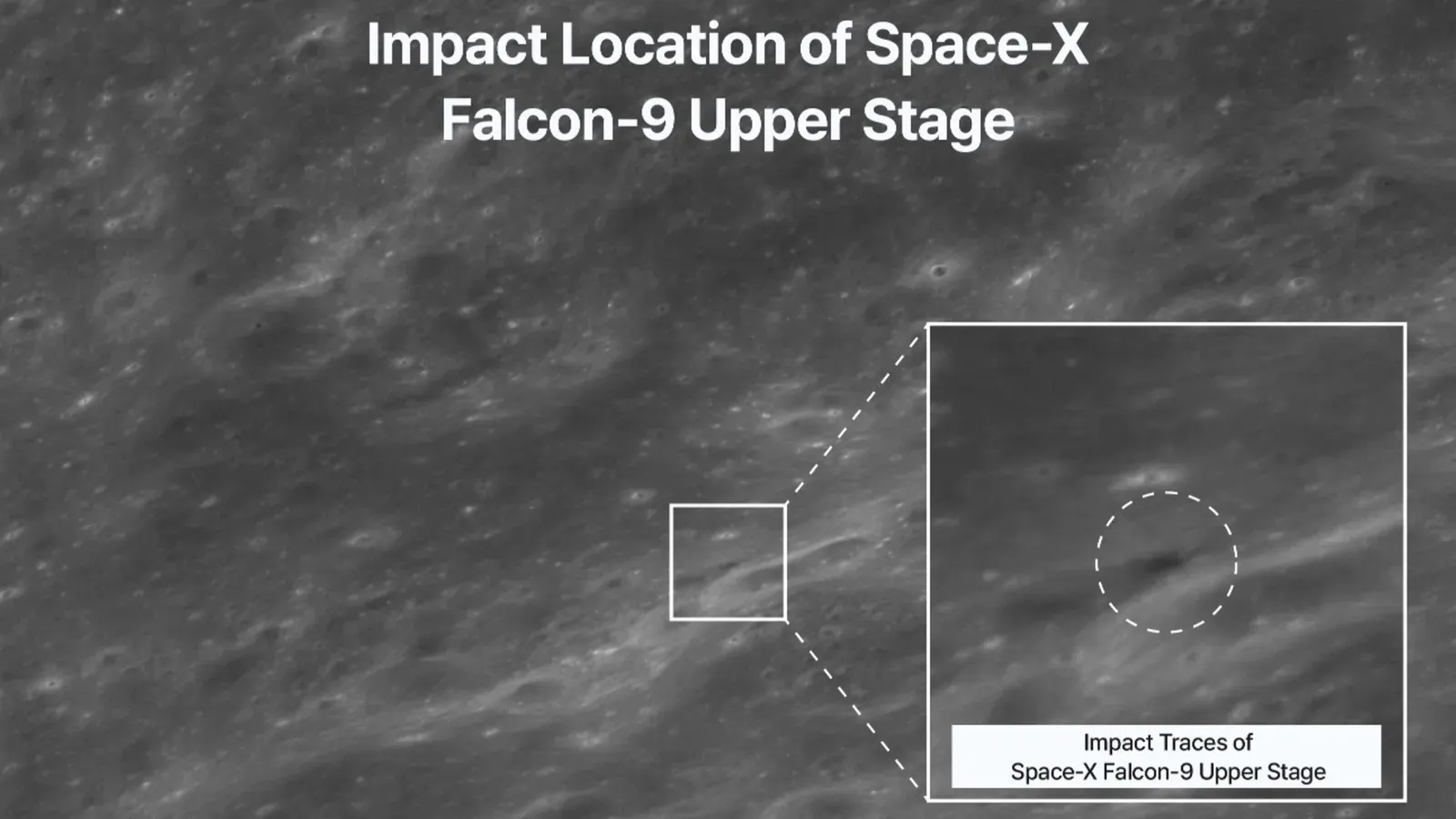
The crash occurred near Einstein crater, on the northwestern limb of the moon, close to the terminator zone where lunar day and night meet.
Images from Korea’s Danuri orbiter showing the before and after views of the lunar crash site.
The 4.4-ton (4 metric tons) rocket part is estimated to have struck the moon at roughly 5,400 mph (8,700 km/h).
As a result, the lunar south pole is now the most coveted location for missions that aim to establish a permanent human presence on the moon.
"It presents a different set of hazards than say the Apollo astronauts faced on the lunar surface from the average background meteoroids that are striking the moon every day.