None
EN
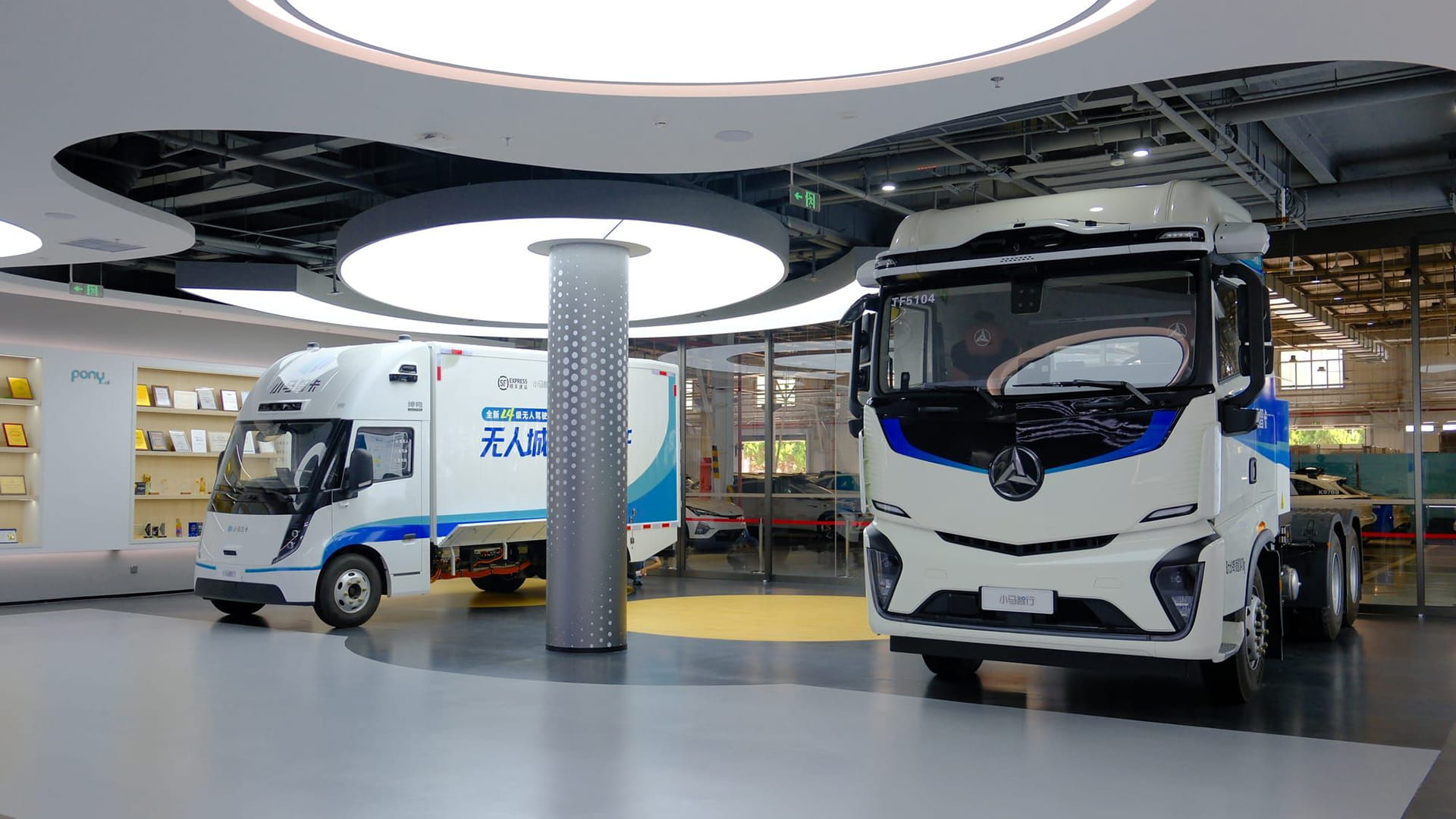
Pony.ai outlines deployment plans for heavy- and light-duty robotrucks
['Ipo Zaozhidao']
KrASIA
He said autonomous driving also pairs well with electric heavy- and light-duty trucks, potentially reducing energy use and emissions.
In principle, a driverless heavy-duty truck could operate around the clock, subject to charging, maintenance, and regulatory requirements.
Pony.ai said the hardware cost for each truck’s autonomous driving kit is about 70% lower than that of the previous generation.
However, He acknowledged that the threshold for deploying robotrucks at scale, particularly heavy-duty trucks, is higher than it is for robotaxis.
According to He, Pony.ai expects to deploy 500–1,000 heavy-duty trucks over the next two to three years and 100,000 light-duty trucks by 2030.