None
EN
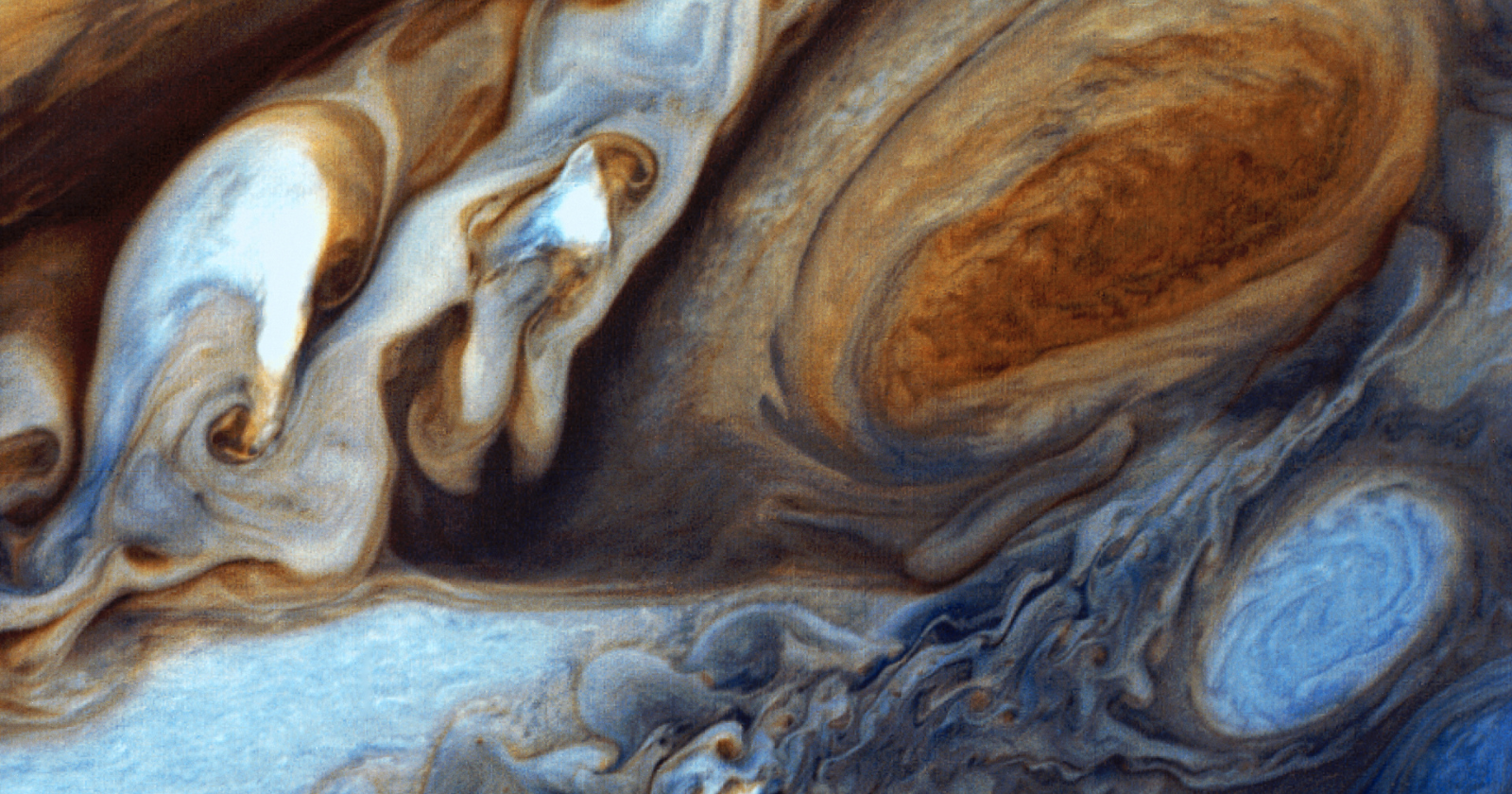
Jupiter has no ground to stand on at all — descend far enough into its atmosphere and there’s no solid surface waiting, only thickening gas that eventually behaves like liquid metal, a world where the very idea of “landing” stops making sense
['Written By', 'Daniel Moran', 'Daniel Moran Is A Writer At Space Daily Covering The Intersection Of Psychology', 'Technology', "Human Behavior. He Is One Of The Publication'S Most Prolific Contributors", 'Writing Across The Mind', 'Meaning', 'Science Pillars. Daniel Brings A Background In Technology Research', 'A Focus On How Scientific Findings Translate Into The Way People Actually Live', 'Work']
Space News From SpaceDaily.Com
What actually happens on the way downNASA’s planetary overview is blunt about it: gas giants like Jupiter never developed a genuine surface, just churning gas and liquid from top to bottom.
Deep enough inside, the pressure and heat crush metal, melt electronics and boil a probe away to nothing.
Gas becomes dense enough to behave like liquid, but there is no shoreline where one ends and the other begins.
So Jupiter has an enormous interior region of liquid metallic hydrogen: not a metal you could hold, but a fluid that conducts electricity like one.
It is the closest thing Jupiter has to solid matter, and it is still a liquid.