None
EN
Legacy of a loon
['Ben Olson']
Sandpoint Reader
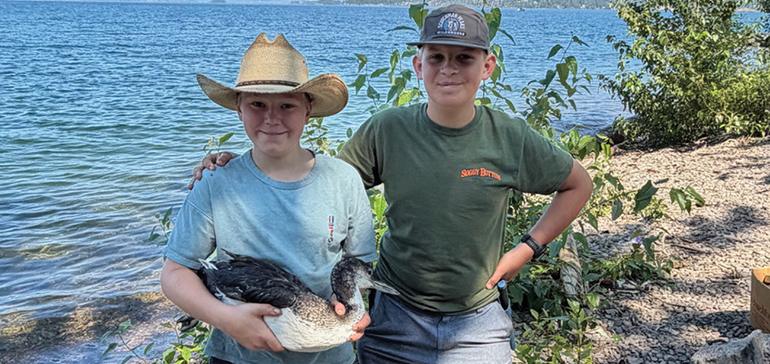
The boys were exploring the marsh using a drone when they came across a distressing sight, a juvenile loon was trapped in the seaweed, seemingly paralyzed and shaking.
The boys knew that seeing a loon at this time of year is extremely rare, so they waded into the reeds and used a knife to cut the bird free and carried it back to the camp, where they realized the loon had a deformed, bloody foot and couldn’t move.
(L-R) Ben Lekander and Simeon Kubacz.
Lead poisoning is the leading cause of death in loons, making up roughly 25%-49% of all loon mortalities.
This article was written by Megan Lekander, with the help of Ben Lekander and Simeon Kubacz.