None
EN
Hidden black hole blast revealed years later by a powerful radio glow
[]
Knowridge Science Report
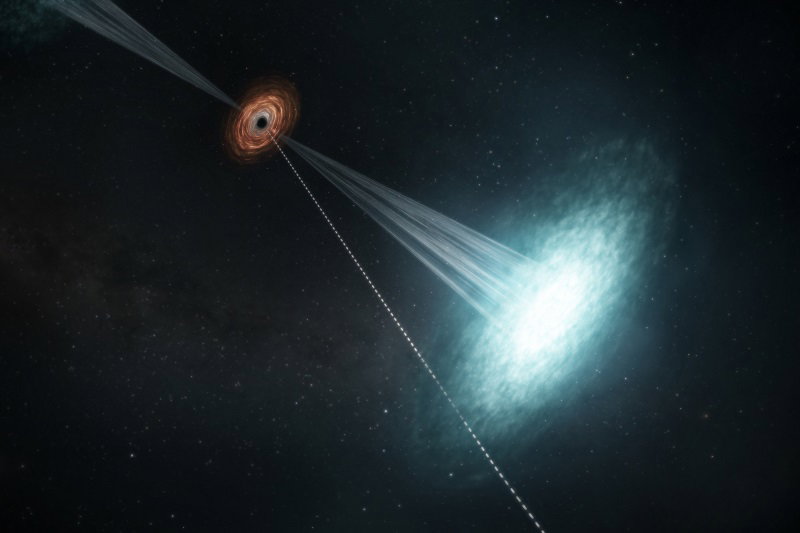
This dramatic phenomenon occurs when a star wanders too close to a black hole.
What makes AT2019ijn particularly exciting is the type of black hole believed to be responsible.
The evidence points to an intermediate-mass black hole, a rare class that sits between the much smaller black holes formed when massive stars die and the supermassive black holes found at the centers of galaxies.
Astronomers have spent decades searching for these middle-sized black holes because they are thought to represent an important missing step in the growth of the universe’s largest black holes.
The discovery suggests that many unusual cosmic flashes detected in visible light could actually be hidden black hole events whose brightest radio signals appear months or even years later.