None
EN
Two-step AI system detects brain tumors from MRI
['Ismail Shahin Et Al.']
healthcare in europe
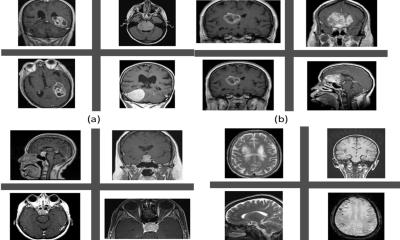
The team, led by scientists from the University of Sharjah, designed a two-step system for analyzing brain MRI images.
“The experiments show that model performance improves when progressing from standard CNNs to CNN with LSTM, and then to attention-enhanced architectures,” the researchers write.
The study reflects real clinical workflows and enables a fair comparison of different deep learning models used for brain tumor detection.
By evaluating model performance within a standardized preprocessing pipeline and task configuration, the study provides structured insight into how distinct model families capture and represent tumor-relevant information.
The findings are encouraging for efforts to improve the accuracy of brain tumor detection.