None
NO
Some of Cal’s most majestic trees are looking sickly. Here’s why
['Nico Savidge', 'More Nico Savidge', '.Wp-Block-Co-Authors-Plus-Coauthors.Is-Layout-Flow', 'Class', 'Wp-Block-Co-Authors-Plus', 'Display Inline', '.Wp-Block-Co-Authors-Plus-Avatar', 'Where Img', 'Height Auto Max-Width', 'Vertical-Align Bottom .Wp-Block-Co-Authors-Plus-Coauthors.Is-Layout-Flow .Wp-Block-Co-Authors-Plus-Avatar']
Berkeleyside
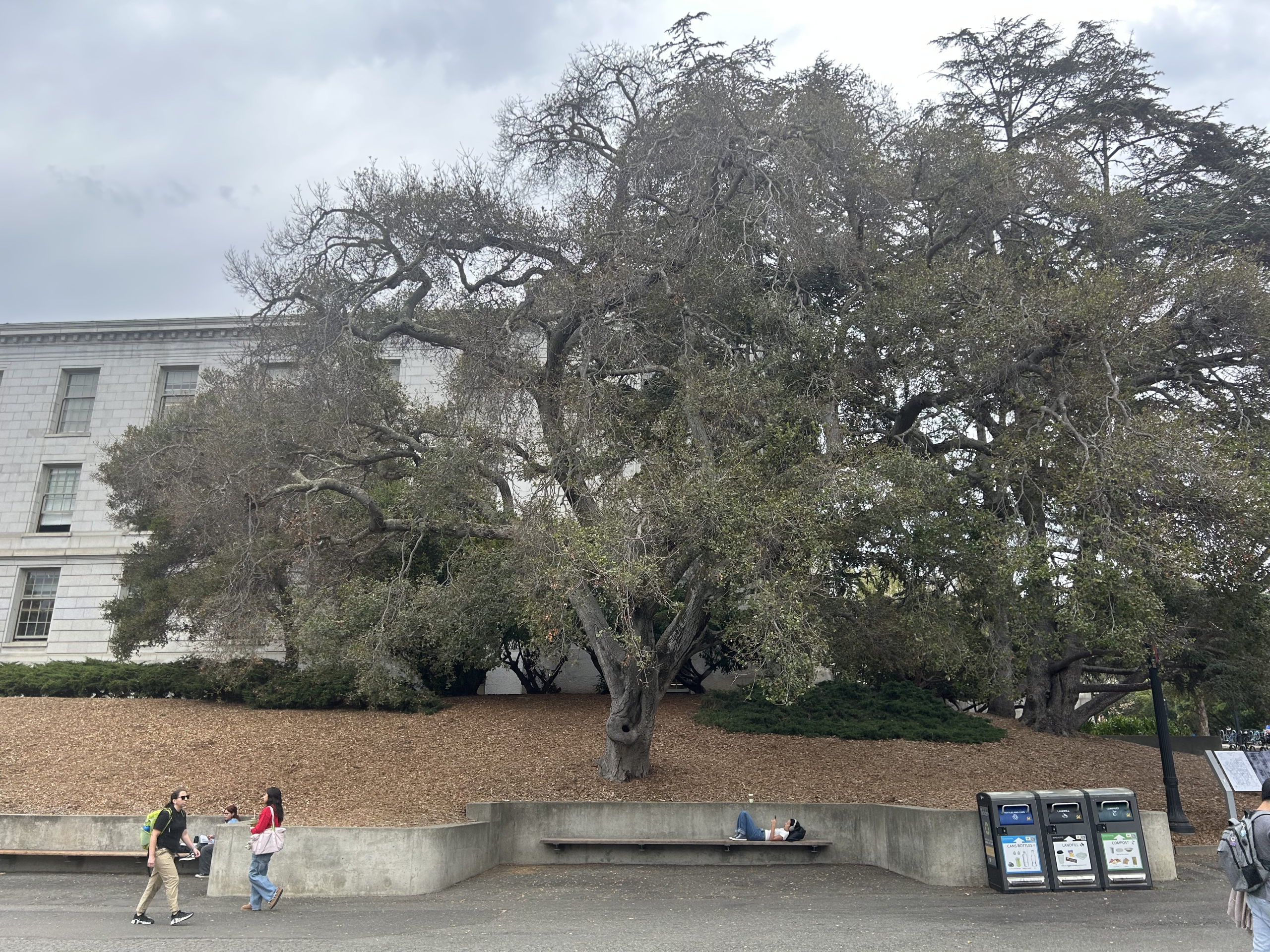
This coast live oak next to Wheeler Hall on the UC Berkeley campus was lush and green a few months ago.
Its canopy was devoured by the California oak moth.
Credit: Nico Savidge/BerkeleysideMany of UC Berkeley’s most majestic trees have been looking a little worse for wear lately.
There’s a lot scientists don’t know about the moth, Oboyski said, like how often outbreaks like this one occur.
Oboyski says homeowners often ask him what pesticide they should use when they notice oak moths have taken a liking to their trees.