None
EN
Scientists unlock secret to Venus flytrap’s hair-trigger response
[]
Damn Interesting Curated Links
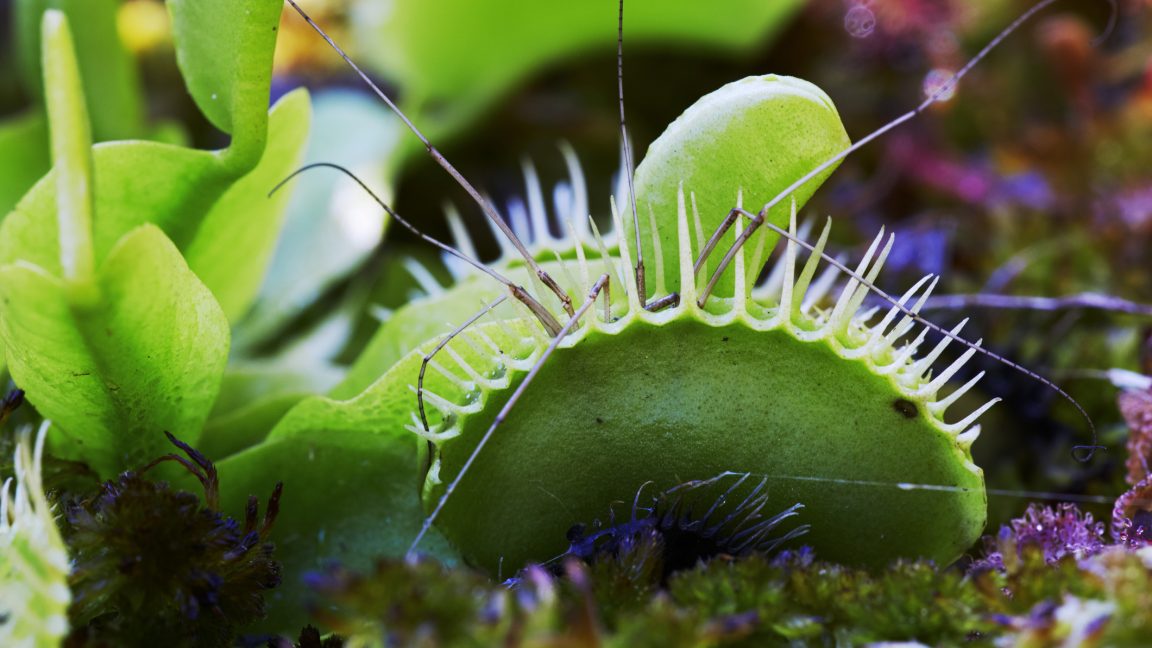
To trap its prey, the Venus flytrap sends rapid electrical impulses, which are generated in response to touch or stress.
Japanese scientists have identified the molecular mechanism that triggers that response and have published their work in a new paper in the journal Nature Communications.
As previously reported, the Venus flytrap attracts its prey with a pleasing fruity scent.
And in 2023, scientists developed a bioelectronic device to better understand the Venus flytrap's complex signaling mechanism by mapping how those signals propagate.
That green fluorescence allowed the team to visually track the changes in calcium concentrations in response to stimulating the plant's sensitive hairs with a needle.