None
EN
AI and Virtual Reality System from UPV Achieves 85% Accuracy in Early Autism Detection
['Niva Goldberg', 'Gil Tanenbaum', 'Alan Gallindoss', 'Abigail Klein Leichman']
Jewish Business News
Researchers at the Human-Tech Institute of the Universitat Politècnica de València (UPV) have developed a groundbreaking system that uses artificial intelligence (AI) and virtual reality (VR) to detect Autism Spectrum Disorder (ASD) in early childhood with over 85% accuracy.
The UPV team tested several machine learning techniques to determine the most effective method for early autism detection, offering a more objective, scalable, and efficient alternative to conventional diagnostic tools.
This breakthrough has the potential to revolutionize early autism screening, enabling faster intervention and improved outcomes for children on the spectrum.
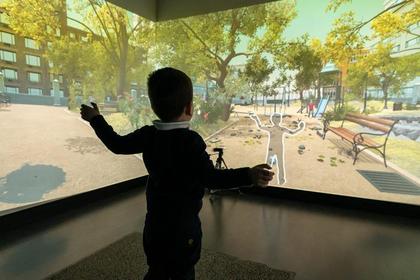
“The use of virtual reality allows us to use recognizable environments that generate realistic and authentic responses, imitating how children interact in their daily lives.
With virtual reality, we can study more genuine reactions and better understand the symptoms of autism,” says Mariano Alcañiz, director of the Human-Tech Institute at the UPV.
['autism'
'early'
'accuracy'
'motor'
'method'
'institute'
'upv'
'ai'
'system'
'tasks'
'mariano'
'virtual'
'reality'
'achieves'
'detection']