None
EN
TWA 7 b: James Webb Space Telescope Finds Its First New Exoplanet
[]
ScienceBlogs - Where the world discusses science
Exoplanets have been detected since 1992 when two, named named Poltergeist and Phobetor, were found orbiting the pulsar PSR B1257+12.
Thousands have been detected indirectly but because they are less bright due to being 'drowned out' by light from their star, direct observation is a challenge.
So the two most common methods of detection look for its effect rather than direct viewing.
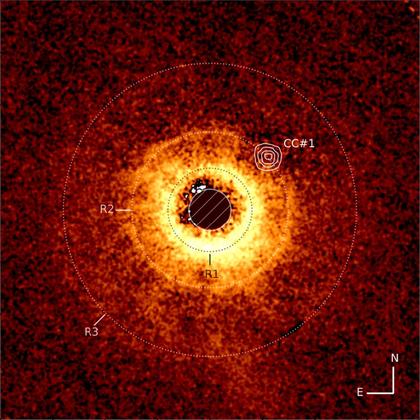
TWA 7 from the Very Large Telescope’s SPHERE instrument with an image from JWST’s MIRI overlayed reveals the empty area around TWA 7 B in the R2 ring (CC #1).
The new planet is comparable in size to Saturn, but that is 10 times lighter than those captured in previous images, and has been named TWA 7 b.
['space'
'targets'
'star'
'twa'
'webb'
'telescope'
'james'
'stars'
'finds'
'exoplanet'
'direct'
'named'
'ring'
'planets'
'planet'
'viewing'
'b']