None
EN
Liturgy of exclusion in stone
[]
Church Times
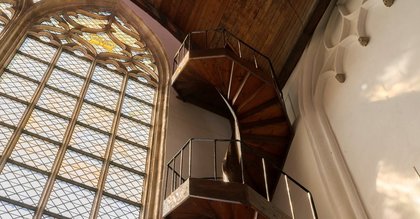
Sacred architecture mirrors the values and priorities of the communities that built them, including assumptions about which bodies belong within their walls.
The result is that sacred spaces frequently function as gatekeepers.
Compounding this exclusion is a longstanding theological tradition that idealised the rational, symmetrical, and self-contained body.
This is a liturgy of exclusion in stone.
Sacred architecture must be read anew, not only as an artefact of the past but as a site for contemporary ecclesial imagination.