None
EN
Athena: Inside Nasa’s fastest-ever supercomputer powering Artemis II
['Cdata', 'Var Template_Content', 'Sso_Login_Box', 'Xwelcome Backorenter The Email Address Or Mobile Number Associated With Your Account To Sign In. Show Passwordsign Innew To The Indian Express Signupxcreate Your Account It Is Quick', 'Easy.Or Show Passwordnextvalidate Otpregisteralready Have An Account', 'Signin', 'Sso_Social_Box', 'Sign In Withgmailfacebookapple', 'Var Follow_Widget_Data', 'Af_Article_Count']
The Indian Express
Its processing power will allow engineers to model spacecraft performance, analyse risks, and hone mission details well before astronauts set foot on a spacecraft bound for the Moon.
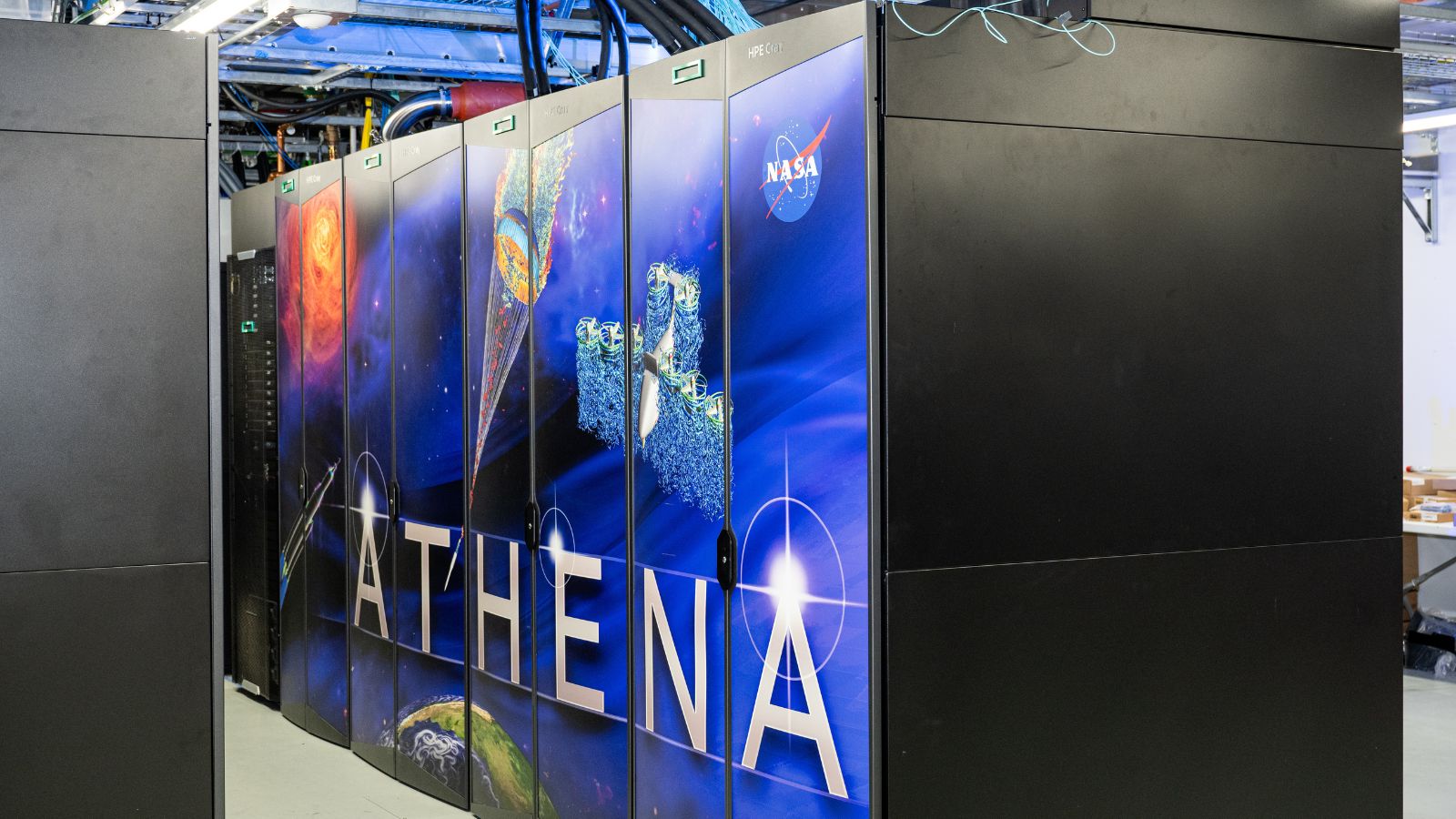
Nasa has unveiled its most powerful supercomputer, named Athena, which is a huge step forward in its ability to handle complex scientific and engineering data.
Athena consists of 1,024 computing nodes, with each node equipped with two 128-core AMD EPYC ‘Turin’ processors.
That’s a total of 256 physical cores per node and over 2,64,000 total cores in the system.
The new supercomputer is named after a figure from Greek mythology, and the name was chosen through an internal Nasa contest that took place last year.