None
EN
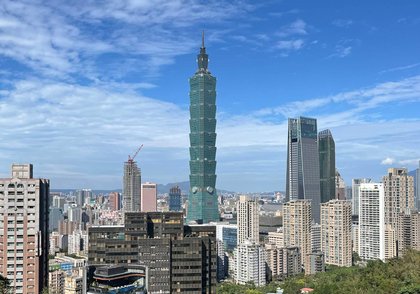
Alex Honnold’s scaling of Taipei 101 warrants a close look at its high-performance facade
['Kristine Klein', '.Wp-Block-Co-Authors-Plus-Coauthors.Is-Layout-Flow', 'Class', 'Wp-Block-Co-Authors-Plus', 'Display Inline', '.Wp-Block-Co-Authors-Plus-Avatar', 'Where Img', 'Height Auto Max-Width', 'Vertical-Align Bottom .Wp-Block-Co-Authors-Plus-Coauthors.Is-Layout-Flow .Wp-Block-Co-Authors-Plus-Avatar', 'Vertical-Align Middle .Wp-Block-Co-Authors-Plus-Avatar Is .Alignleft .Alignright']
The Architect’s Newspaper
Alex Honnold approached his free-solo climb up Taipei 101 like he would any ascent up a mountain.
Prior to mounting Taipei 101, sans ropes and harnesses, Honnold studied the facade of Taipei 101, comparing the challenging elements of its makeup to that of a “climbing pitch,” the term climbers use to differentiate segments of an activity.
He said in an interview prior to the climb that where rocks and buildings differ is in steepness.
Numerically speaking, the building’s 101 stories are a nod to the “renewal of time” and its construction at the start of a new century.
And for Taipei 101, the descriptor high-performance building has taken on a new meaning.