None
EN
Sean Batty: What’s driving the current extreme weather across the Northern Hemisphere?
['Sean Batty', '.Wp-Block-Co-Authors-Plus-Coauthors.Is-Layout-Flow', 'Class', 'Wp-Block-Co-Authors-Plus', 'Display Inline', '.Wp-Block-Co-Authors-Plus-Avatar', 'Where Img', 'Height Auto Max-Width', 'Vertical-Align Bottom .Wp-Block-Co-Authors-Plus-Coauthors.Is-Layout-Flow .Wp-Block-Co-Authors-Plus-Avatar', 'Vertical-Align Middle .Wp-Block-Co-Authors-Plus-Avatar Is .Alignleft .Alignright']
STV News
We’re only four weeks into 2026, and already the Northern Hemisphere has had a remarkable run of extreme winter weather.
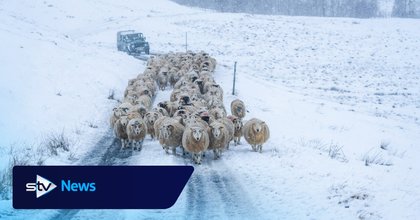
Heavy snow and ice caused widespread disruption, and even southern Florida experienced some of its coldest weather since 2010.
What’s happened this winter is that the cold air normally locked over the Arctic has been displaced southwards into Europe, Asia and North America.
As a result, the “ring fence” has been leaky – allowing bitter Arctic air to spill south, while milder air pushes north into the Arctic to replace it.
With cold air never far away, there’s still the potential for more snow in the mountains, particularly across the upper slopes of our ski centres.