None
EN
‘Once Upon a Time in Harlem’ Review: Cultural Time-Capsule Doc Invites Us to a Once-in-a-Lifetime Party
['Lisa Kennedy', '.Wp-Block-Co-Authors-Plus-Coauthors.Is-Layout-Flow', 'Class', 'Wp-Block-Co-Authors-Plus', 'Display Inline', '.Wp-Block-Co-Authors-Plus-Avatar', 'Where Img', 'Height Auto Max-Width', 'Vertical-Align Bottom .Wp-Block-Co-Authors-Plus-Coauthors.Is-Layout-Flow .Wp-Block-Co-Authors-Plus-Avatar', 'Vertical-Align Middle .Wp-Block-Co-Authors-Plus-Avatar Is .Alignleft .Alignright']
Variety
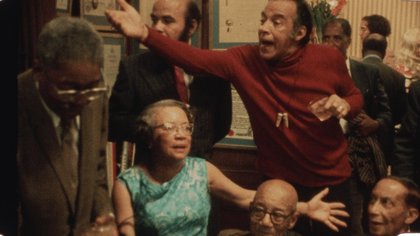
The guests comprised a who’s who of that period in the 1920s and 1930s, when writers, actors, intellectuals and activists made Harlem a cultural hub of Black creativity and cultural ambition.
Regina Andrews who was a young librarian at the 135th Street Library, recalls a party for author Jessie Fauset.
Artist Ernest Crichlow recalls traveling as a young teen from Brooklyn up to Harlem and the sculptor Augusta Savage’s basement studio.
While the folklorist-anthropologist-author of “They’re Eyes are Watching God” died in 1960, there are plenty of multi-hyphenates at the party.
“Once Upon a Time in Harlem” turns viewers into time travelers but also invited guests, rightly grateful to be in the room.