None
EN
Korean artist Chung Sang-hwa dies at 93, leaving behind a legacy of monochrome painting
['The Korea Times']
South China Morning Post
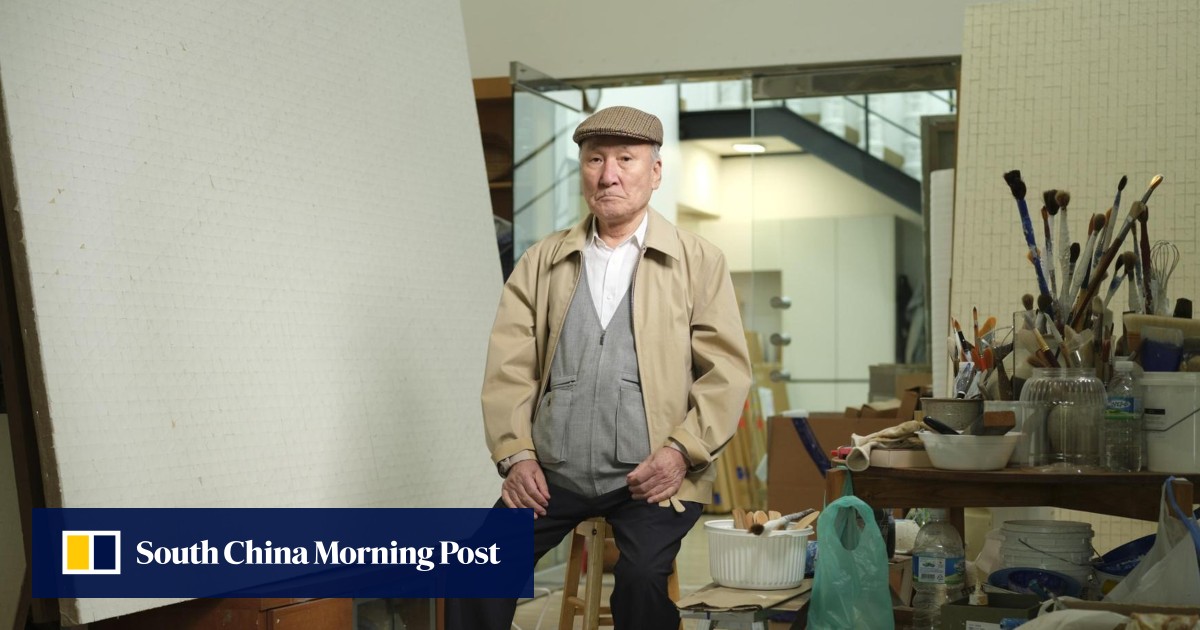
Chung Sang-hwa, a towering figure in Korean modern art whose meticulously built and cracked monochrome surfaces turned a flat canvas into a signature grid, died on January 28 after a prolonged illness.
Over a career that stretched from the upheaval of the 1950-53 Korean war to the international rediscovery of dansaekhwa, or monochrome painting, in the 21st century, Chung pursued a single question with near-ascetic focus: how to push the two-dimensional plane beyond its limits without ever fully abandoning it.
Chung Sang-hwa’s (from left) “Untitled 74-6” (1974) and “Untitled 87-11-10” (1987).
Photo: courtesy of the artist and Gallery HyundaiBorn in 1932 in Yeongdeok, North Gyeongsang province, Chung entered the College of Fine Arts at Seoul National University in 1953, despite opposition from his family.
He initially made a foray into the highly gestural language of Art Informel, an art movement, in the turbulent aftermath of the Korean war, channelling the era’s prevailing sense of loss, anxiety and fear.