None
EN
They Came Not to Bury, But to Praise the Telecom Act of 1996
['Broadband Breakfast', 'Akul Saxena', 'Eric Urbach']
Broadband Breakfast
WASHINGTON, Jan. 28, 2026 — Four telecommunications policy veterans celebrated much of the 1996 Telecom Act and its legacy during a Wednesday BroadbandLive event , but differed on whether it had helped or hindered America’s dynamic climate of tech and telecom innovation over three decades.
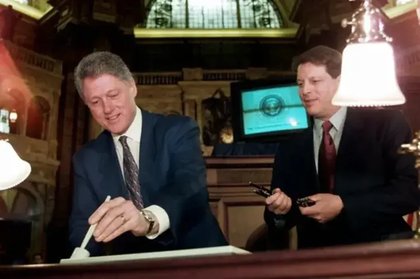
The Act, which was signed into law by President Bill Clinton on February 8, 1996, had earned bipartisan support.
The law did shift U.S. communications policy from rate regulation to promoting competition, and removed barriers preventing phone and cable companies from entering each other's markets.
A ‘gentleman’s C’But Randolph May, president of the Free State Foundation, awarded the Act "a gentleman's C." The elementation of the Telecom Act was not, he said, as deregulatory as intended.
"Until the pandemic, if you lived where I grew up in Southeast Queens in New York, you did not have affordable broadband," Irving said.