None
HU
Study Tracks Wild Potato Across the Southwest
['Jessica Esther Saraceni']
Archaeology Magazine
Solanum jamesii plant in flower (left) and tubers in a ceremonial basket (right)SALT LAKE CITY, UTAH—According to a statement released by the Public Library of Science, people carried a small, wild potato known as the Four Corners potato (Solanum jamesii), across the southwestern United States some 10,000 years ago.
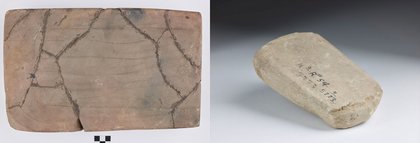
Archaeologist Lisbeth Louderback of the University of Utah and her colleagues analyzed starch granules on stone grinding tools from 14 archaeological sites, and found starch from the Four Corners potato on tools from nine of them.
Most of these sites rest near the northern edge of the habitat for the modern Four Corners potato, along the borders of Colorado, Utah, Arizona, and New Mexico.
Interviews with Diné elders confirmed that the Four Corners potato is still eaten and used for spiritual purposes.
“By combining new archaeobotanical data and elder interviews with transport patterns identified by genetic sequencing of the Four Corners potato, we have defined an anthropogenic range distinct from its natural distribution,” Louderback said.